Boyne Valley Day Tours
Private Hire Day Tours with Michael Fox, National Tour Guide and Professional Driver
Discover Ireland’s Ancient East with private, fully guided day tours centred on the Boyne Valley and its extraordinary layers of prehistory, early Christianity, and medieval heritage. Separate full day tours are also available to County Wicklow, renowned for its dramatic landscapes, historic estates, and beautifully landscaped gardens.
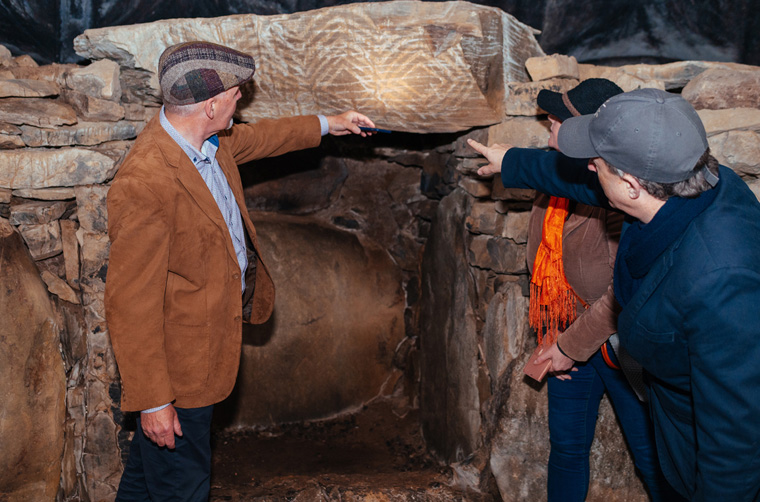 Fourknocks Passage Tomb dating back 5,000 years
Newgrange
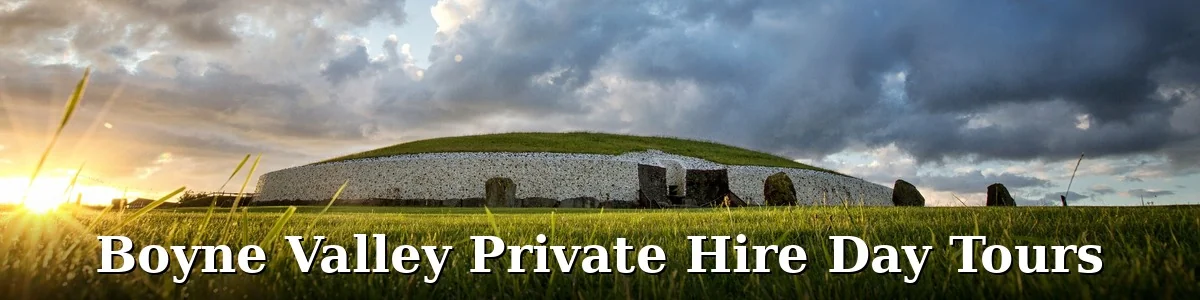
Newgrange forms part of the Brú na Bóinne World Heritage Site and is a Neolithic passage tomb built over 5,000 years ago. It is renowned for its stone art and its precise alignment with the Winter Solstice sunrise.
Knowth
Knowth is the largest of the three great passage tombs at Brú na Bóinne, built around 3200 BC. It is distinguished by its twin passages and by the extraordinary quantity of megalithic art carved on its kerbstones, representing one of the richest concentrations of prehistoric art in Europe.
Dowth
Dowth is a Neolithic passage tomb dating to around 3200 BC and forms part of the Brú na Bóinne World Heritage landscape. Less excavated than Newgrange or Knowth, it retains a more enigmatic character and appears to have been associated with solar events linked to the winter period.
Fourknocks
Fourknocks is a Neolithic passage tomb later reused in the Bronze Age. Quieter and less visited than Brú na Bóinne, it offers an intimate insight into Ireland’s prehistoric funerary landscape.
Hill of Tara
The Hill of Tara is the great ceremonial landscape traditionally associated with the High Kings of Ireland. Its earthworks, monuments, and commanding views make it one of the most symbolically important sites in Irish history.
Bective Abbey
Bective Abbey is a Cistercian monastery founded in 1147 and closely connected to Mellifont. Its surviving cloister and riverside setting make it one of the most atmospheric monastic ruins in County Meath.
Monasterboice
Monasterboice is one of Ireland’s most important early Christian monastic sites, celebrated for its outstanding high crosses, including Muiredach’s Cross, among the finest examples of medieval stone carving in Ireland.
Hill of Slane
The Hill of Slane rises above the River Boyne and is closely linked with Ireland’s conversion to Christianity. Tradition holds that Saint Patrick lit the Paschal fire here in defiance of pagan law.
Skryne
The Hill of Skryne lies close to Tara and has long associations with kingship and early medieval history. Tradition records that relics linked with Saint Colmcille were brought here for safekeeping during times of unrest.
Duleek
Duleek, meaning “the House of Stones”, was an important early Christian centre associated with Saint Cianán. The site includes the remains of St Mary’s Abbey and a churchyard rich in medieval and later memorials.
Kells
Kells is a historic monastic town with a strong early medieval heritage. The site is known for its impressive stone crosses and the nearby Spire of Lloyd, an unusual inland lighthouse offering wide views across the surrounding countryside.
Tlachtga
Tlachtga, also known as the Hill of Ward, is closely associated with the festival of Samhain. Tradition speaks of a great ceremonial fire lit here, with flames carried to other royal hills across the region.
Fore Abbey
Fore Abbey in County Westmeath was founded by Saint Feichin in the 7th century and later developed as a Benedictine priory under the de Lacy lordship. The ruins are set in a peaceful valley and are linked locally with the “Seven Wonders of Fore”.
Wicklow
A day tour to County Wicklow offers a contrast to the Boyne Valley, with mountain scenery, historic routes, and peaceful valleys. Highlights often include Glendalough and the dramatic landscapes of the Wicklow Mountains.